
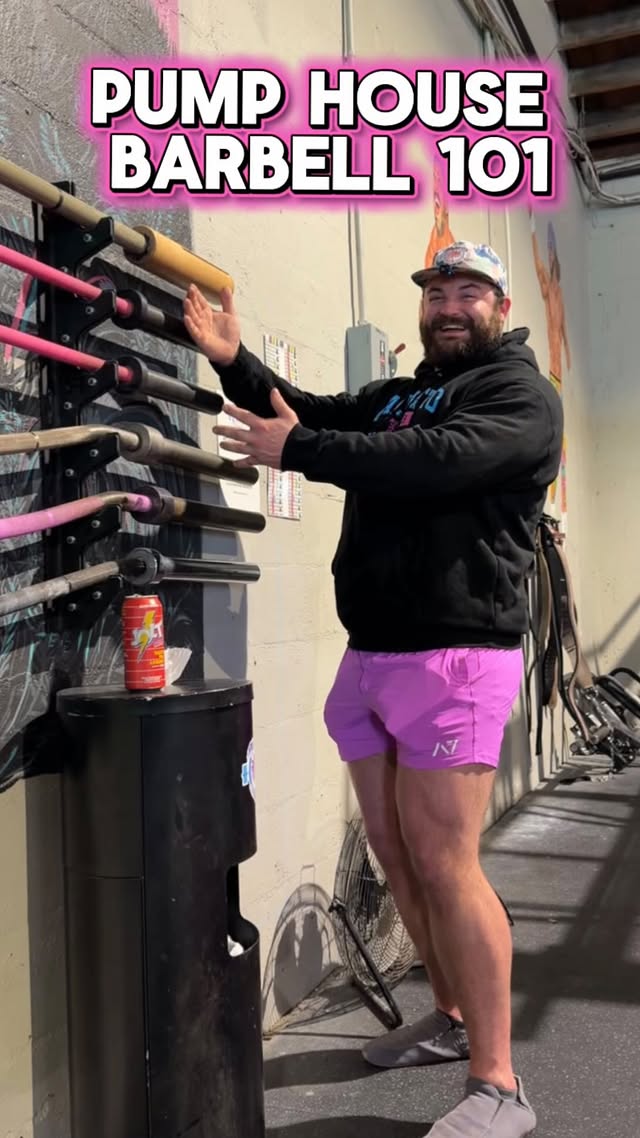
Women’s powerlifting in Charleston, SC is growing faster than anywhere else in the Lowcountry. From Park Circle to West Ashley, women are stepping onto platforms, loading calibrated plates, and competing at local, state, and national levels. If you’re a woman in the Charleston area looking for a serious training environment that doesn’t treat you like an afterthought, this guide covers everything you need to know about women’s powerlifting in the Holy City.
At Palmetto Pump House on Rivers Ave in North Charleston, roughly 40% of the membership base is women. That’s not a marketing statistic — it’s the reality of a gym built around strength, not appearance. Competition squat racks, calibrated Eleiko-style plates, deadlift platforms, chalk bowls at every station, and 24/7 key fob access mean you train on your schedule, not someone else’s.
Why Women’s Powerlifting Is Surging in Charleston
The old narrative that women should stick to cardio machines and 5-pound dumbbells died years ago. Research from the National Strength and Conditioning Association shows that women respond to progressive overload with the same relative strength gains as men. The difference isn’t biology — it’s access to the right environment.

Charleston’s fitness culture has traditionally leaned toward boutique studios and beach-body aesthetics. Nothing wrong with that if it’s your thing. But for women who want to squat heavy, deadlift with chalk on their hands, and bench press without getting side-eyed, the options have historically been limited.
That’s changing. USA Powerlifting (USAPL) sanctioned meets in South Carolina have seen a 35% increase in female competitors since 2022. The IPF Women’s World Championships continue to set participation records. Locally, women from the Charleston area are competing in USAPL, USPA, and RPS federations — and winning.
Women’s Competition Classes Explained
If you’re new to powerlifting, the weight class system can seem confusing. Here’s the breakdown for women competing in USAPL/IPF sanctioned meets:
- 47 kg (103.6 lbs) — The lightest weight class. Highly competitive at the national level.
- 52 kg (114.6 lbs) — Popular entry-level class for smaller-framed lifters.
- 57 kg (125.7 lbs) — One of the most competitive classes in women’s powerlifting.
- 63 kg (138.9 lbs) — Deep talent pool at every level of competition.
- 69 kg (152.1 lbs) — Strong field at both state and national meets.
- 76 kg (167.6 lbs) — Growing class with exceptional athletes.
- 84 kg (185.2 lbs) — Where raw strength really starts to show.
- 84+ kg — The super heavyweight class. No upper limit. Pure power.
You don’t need to cut weight or stress about classes when you’re starting. Train first. Get strong. Compete at whatever bodyweight feels right. The classes exist for fair competition — not to pressure you into a certain size.
PRO TIP
Your first meet should be at your walk-around bodyweight. Don’t cut. Don’t manipulate water. Just show up, lift, and get the experience. The weight class optimization comes later — if you even want it to.
Programming Differences for Women Lifters
Research published in the Journal of Strength and Conditioning Research indicates that women generally recover faster between sets and can handle higher training volumes at a given percentage of their one-rep max compared to men.

What does that mean practically? A few things:
Higher rep ranges work well. While men often program sets of 1-3 for strength, many women respond better to sets of 3-5 with more total volume. Your nervous system recovers faster, so you can accumulate more quality reps per session.
Frequency can be higher. Squatting or benching 3-4 times per week is common and effective for women lifters. The recovery window is typically shorter, which means more opportunities to practice and build strength.
Bench press benefits from extra volume. Women often have proportionally less upper body muscle mass starting out, so bench press responds particularly well to increased frequency and volume. Three bench sessions per week isn’t unusual for competitive women lifters.
Menstrual cycle considerations. Studies from the Scandinavian Journal of Medicine and Science in Sports show that training periodization aligned with menstrual cycles can optimize performance. The follicular phase (days 1-14) tends to favor higher intensity work, while the luteal phase may benefit from higher volume at moderate intensity. This isn’t universal — track your own data and adjust accordingly.
Want to experience the pump for yourself? Book a free tour and see why 560+ members call Palmetto Pump House home.
Equipment That Matters for Women’s Powerlifting
Not all gym equipment is created equal, and this matters especially in powerlifting where equipment specifications affect your lift setup and competition carry-over.
At Palmetto Pump House, the equipment isn’t generic chain-gym hardware. Here’s what matters for women’s training specifically:
- Competition-spec squat racks with adjustable J-hooks that go low enough for shorter lifters. Nothing worse than unracking a heavy squat on your tiptoes.
- Calibrated plates — accurate to within 10 grams. When you’re loading 95% of your max, a 2-pound discrepancy matters.
- Deadlift platforms with proper bar spacing and surface grip. Train on the same surface you’ll compete on.
- 15 kg (33 lb) women’s bars — thinner diameter (25mm vs 28-29mm for men’s bars) for better grip, especially important for smaller hands on deadlifts.
- Chalk bowls at every station — not locked in a closet or banned entirely like at commercial gyms.
- Open floor space for accessory work, stretching, and warm-ups without fighting for space between machines.
“The equipment you train on should match the equipment you compete on. Anything less is leaving kilos on the platform.”
Finding Your Community in Charleston
Powerlifting can feel isolating if you’re training at a gym where nobody else deadlifts. Finding a training community — especially as a woman — changes everything.
The powerlifting community at PPH includes women competing at every level: first-timers preparing for their debut meet, experienced state-level competitors, and lifters chasing national qualifying totals. The culture is simple: lift heavy, support each other, leave the ego at the door.
What this looks like in practice: spotters who actually know how to spot, training partners who understand programming, and a room full of people who cheer when someone hits a PR — regardless of the weight on the bar. A 135-lb squat PR gets the same reaction as a 405-lb squat PR if it represents honest effort.
Charleston’s broader powerlifting community also includes meet day support crews, lifters who travel together to competitions across South Carolina and beyond, and informal training groups that form organically. The sport connects people across Park Circle, Mount Pleasant, James Island, West Ashley, and Summerville.
Your First Powerlifting Meet: What to Expect
If you’ve never competed, the idea of stepping onto a platform in front of judges and spectators can be intimidating. Here’s the reality: your first meet is mostly about logistics, not performance.
- Weigh-ins happen 2 hours before lifting starts (for 2-hour weigh-ins) or the day before (for 24-hour weigh-ins). You’ll step on a scale, get your official weight, and that determines your class.
- Equipment check — officials will verify your singlet, belt, knee sleeves, and wrist wraps meet federation standards. Buy approved gear ahead of time.
- Three attempts per lift — squat, bench, deadlift, in that order. Your opener should be something you can hit on your worst day. Your second attempt is a solid, confident lift. Your third attempt is the reach.
- Commands — learn them. Squat: “Squat” and “Rack.” Bench: “Start,” “Press,” “Rack.” Deadlift: “Down.” Practice with commands in training.
- Judging — three judges with white (good lift) or red (no lift) lights. You need at least two whites.
The best preparation? Train at a gym where the equipment matches competition standards. If you’re training on competition-grade equipment, the platform on meet day will feel familiar — not foreign.
Programming for Beginners vs. Intermediate Women Lifters
Beginners (0-2 years of barbell training):
Linear progression still works. Start with a simple program — squat, bench, deadlift, overhead press — and add weight each session. Programs like Starting Strength, GZCLP, or 5/3/1 for Beginners all work well. The key is consistency and progressive overload, not complicated periodization.
Intermediate (2+ years, progress slowing):
This is where block periodization and daily undulating periodization (DUP) become valuable. An intermediate woman lifter might run a 4-day upper/lower split with squat and bench variation work, focused accessories for weak points, and planned deloads every 4-6 weeks.
Studies show that intermediate female lifters benefit from higher training frequency — squatting 3x per week (heavy, moderate, light) often produces better results than squatting once or twice per week with maximum intensity. The same applies to bench press.
Nutrition for Women in Powerlifting
Powerlifting nutrition isn’t about restriction. It’s about fueling performance. Research from the International Society of Sports Nutrition recommends that strength athletes consume 1.6-2.2 grams of protein per kilogram of bodyweight daily.
For a 63 kg (139 lb) female lifter, that’s roughly 100-140 grams of protein per day. Paired with adequate carbohydrates for training fuel and enough calories to support recovery, this creates the foundation for strength gains without obsessive dieting.
Common mistakes women make in powerlifting nutrition: under-eating (you can’t build strength in a chronic deficit), avoiding carbs before training (your muscles need glycogen), and not eating enough post-training (the recovery window is real).
PRO TIP
Track your training alongside your nutrition for at least 8 weeks. You’ll start to see patterns — which days you feel strongest, what meal timing works, and how sleep affects your lifts. Data beats guessing every time.
Safety and Injury Prevention
Powerlifting is statistically one of the safest strength sports, with injury rates comparable to or lower than recreational running according to a 2017 systematic review in the British Journal of Sports Medicine. That said, smart training practices matter.
- Warm up properly. General movement + specific warm-up sets ramping to your working weight.
- Use safeties. Squat in a rack with safety bars set at the right height. Never squat heavy without them.
- Learn to bail. Knowing how to safely dump a squat or bail from a bench is a skill. Practice it.
- Don’t ego lift. Grinding reps with broken form teaches your body the wrong motor patterns. Better to lift lighter with perfect technique.
- Get coaching. Even one session with an experienced powerlifting coach can fix form issues that would take months of YouTube watching to identify.
Training at a dedicated powerlifting facility with proper equipment and knowledgeable lifters around you is itself an injury prevention strategy. Commercial gyms with undersized racks, no platforms, and staff who’ve never touched a barbell are where preventable injuries happen.
Why Palmetto Pump House Welcomes Women Lifters
The culture at PPH isn’t “welcoming to women” as some bolt-on marketing afterthought. Women are the culture — training alongside everyone else, hitting PRs, preparing for meets, and contributing to the 560+ member community that trains here.
Located at 4221 Rivers Ave, Suite 100, North Charleston, the gym offers 24/7 key fob access. That means early morning sessions before work, late-night training after the kids are asleep, or weekend sessions at your own pace. No class schedules. No waiting for a squat rack because someone’s doing curls in it.
Membership starts at $90/month for military and first responders, $95/month for students, and $105-$115/month for standard memberships. Couples can join for $155/month. No contracts — month to month. If you want to try it first, day passes are $20.
Signing up is easy: visit the Wellness Living membership page, pick your plan, and you’ll have your key fob access within the day. Or call 843-608-1162 with questions.
Charleston’s Growing Women’s Strength Community
Beyond PPH, the Charleston area is seeing a broader shift. Women’s strength training meetups, informal lifting groups, and social media communities connect lifters across the Lowcountry. From Goose Creek to Daniel Island, Summerville to Folly Beach — women are finding each other and training together.
Local meets hosted at various venues in the greater Charleston area give women opportunities to compete without traveling far. South Carolina USAPL meets are typically held in the Midlands and Upstate, but the Lowcountry representation is growing each year.
If you’re a woman considering powerlifting in Charleston, the barrier to entry has never been lower. The community exists. The equipment is here. The knowledge is accessible. All that’s left is showing up and putting weight on the bar.

Ready to start? Check out our complete guides on powerlifting in Charleston and strength training in the Charleston area for more training resources. And if you’re looking for a 24/7 gym that doesn’t lock the chalk away, you know where to find us.
READY TO GET PUMPED?
Join 560+ members at Charleston’s premier strength training gym. 24/7 access, competition equipment, zero judgment.
Frequently Asked Questions About Women’s Powerlifting in Charleston
Is powerlifting safe for women?
Yes. Powerlifting has a lower injury rate than recreational running according to published research in the British Journal of Sports Medicine. Proper coaching, appropriate loading, and competition-grade equipment make it one of the safest strength sports for women.
Do I need to be strong to start powerlifting?
No. Powerlifting is how you get strong, not something you need to already be. Every competitive lifter started with an empty bar. The sport meets you where you are.
What equipment do I need for my first powerlifting meet?
A singlet, a belt (optional but recommended), flat-soled shoes or lifting shoes, and federation-approved knee sleeves if you want them. Your gym should have everything else. Check your specific federation’s equipment list for approved brands.
How much does it cost to train at Palmetto Pump House?
Memberships range from $90/month for military and first responders to $105-$115/month for standard plans. Students pay $95/month. Day passes are $20. No contracts required. Visit the Wellness Living page to sign up.
Where is Palmetto Pump House located?
4221 Rivers Ave, Suite 100, North Charleston, SC 29405. We’re right on Rivers Ave with easy access from I-26, Park Circle, Goose Creek, and Summerville. The gym is open 24/7 with key fob access.
Leave a Reply