
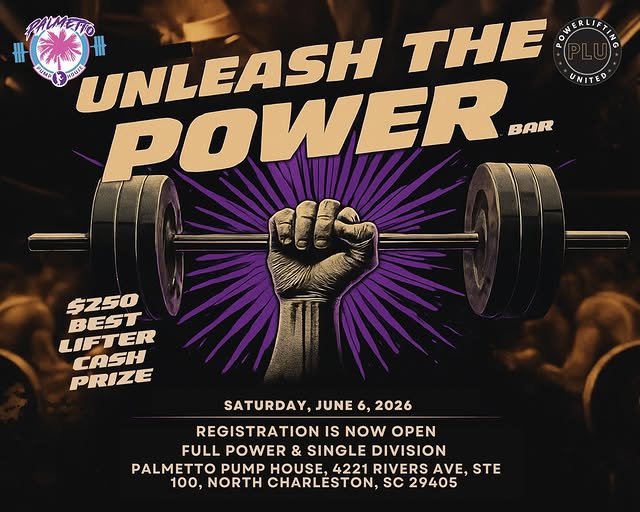
Strength training in North Charleston comes down to three decisions: a proven program, a gym with real barbell equipment, and a schedule you can keep. Programs like Starting Strength, StrongLifts 5×5, and GZCLP cover the first; Palmetto Pump House at 4221 Rivers Ave, Suite 100, North Charleston — with 8+ squat racks, Texas Power Bars, platforms, and 24/7 access from $90–$115/month — covers the second and third.
Getting strong isn’t complicated, but the fitness industry profits from making it look complicated. This guide cuts through it: which programs actually work, what results you can realistically expect, what equipment your training requires, and how to make it all fit a real North Charleston schedule.
Strength Training in North Charleston: The Lay of the Land
The Charleston area has plenty of places to exercise and far fewer places to train. Big-box chains along Rivers Ave and across North Charleston are built around cardio and machines; boutique studios downtown sell classes, not barbells. If your goal is measurable strength — more weight on the squat, bench, deadlift, and press over months and years — you need a facility designed around the barbell, with racks you don’t have to queue for and a floor where effort is normal.
That’s the niche Palmetto Pump House fills: a dedicated strength gym serving North Charleston, Park Circle, Hanahan, Goose Creek, and Summerville, a few minutes off I-26 with free parking out front.
Picking Your Program: Four That Actually Work
Don’t invent your own program in year one. These four have built more strength than every Instagram routine combined:
- Starting Strength — three sessions a week, five lifts, add weight every workout. The fastest road from untrained to respectably strong.
- StrongLifts 5×5 — same linear-progression idea with five sets of five. Slightly more volume, very simple to run from an app.
- GZCLP — a linear progression with built-in backup plans when reps stall. Great bridge from beginner to intermediate.
- 5/3/1 — Jim Wendler’s monthly-cycle system for intermediates who can no longer add weight every session. Slow, steady, sustainable.
Pick one, run it honestly for six months, and you’ll pass 90% of gym-goers who program-hop. Not sure which fits? PPH has experienced strength coaches who can match a program to your starting point — call 843-608-1162 and ask about coaching availability.
The Big Four Lifts and Why They Matter
- Squat — the foundation. Trains the legs, hips, and trunk under load like nothing else.
- Bench press — upper-body pressing strength, best trained with a real bar, a real rack, and ideally a spotter (easy to find at a gym full of lifters).
- Deadlift — total-body strength in one movement. Needs a platform, decent bar, and chalk — which is exactly why chain gyms quietly discourage it.
- Overhead press — the most honest upper-body lift and the one most gyms’ low ceilings and crowded dumbbell areas punish.
What Results Actually Look Like
Realistic expectations keep you training when motivation dips. For a consistent lifter on a sensible program with adequate food and sleep:
- Weeks 1–8: rapid “newbie gains” — most lifters add weight to every lift nearly every session as technique and neural efficiency improve.
- Months 3–6: progress shifts from every session to every week. Body composition changes become visible; lifts that felt heavy in month one become warm-ups.
- Year 1: a dedicated beginner can typically squat around bodyweight for reps and deadlift well beyond it — strength that puts them ahead of almost everyone who merely “works out.”
The common thread in every success story: they didn’t miss sessions. Which is where access and environment stop being details and start being the whole game.
The Equipment Your Program Assumes You Have
Every program above assumes a squat rack, a quality barbell, plates in small increments, a bench, and somewhere to deadlift. Palmetto Pump House stocks all of it at competition grade: 8+ squat racks, Texas Power Bars, calibrated plates, dedicated deadlift and Olympic platforms, specialty bars (safety squat bar, trap bar, and more), benches, dumbbells up to 150 lbs, and conditioning equipment for your off days. No waiting for the one functional rack. No chalk ban. No lunk alarm.
When Progress Stalls: The Boring Fixes That Work
Every lifter stalls. Before you blame the program, audit the basics in this order:
- Sleep. Strength is built in recovery. Seven hours is the floor, not the goal.
- Food. If you’re trying to get stronger in a steep calorie deficit, the bar will let you know. Adequate protein and enough total calories solve more plateaus than any technique cue.
- Technique drift. Film your top sets. The squat that stalled is often a squat that quietly got high, or a deadlift that drifted off your legs.
- Load management. Take the deload your program prescribes instead of treating it as a suggestion for weaker people.
If all four check out and you’re still stuck, that’s when a coach earns their fee — a single session of qualified eyes on your lifts can save months of guessing.
Train With People Who Are Stronger Than You
The most underrated programming variable is the room. Training around 560+ members who take the barbell seriously — including meet-tested powerlifters — means free form checks, ready spotters for heavy bench days, and the simple accountability of familiar faces noticing when you skip a week. It’s a real effect: standards rise to match the environment. A 5.0-star rating across 127 reviews says the environment holds up.
Training on a North Charleston Schedule
Shift work, military duty at Joint Base Charleston, kids, commutes — the number-one program killer in the real world is gym hours. PPH members get 24/7 keyed access, 365 days a year, so a 4:30 AM squat session or an 11 PM deadlift day is always available. Staffed hours run Mon–Fri 9–5, Sat 9–3, Sun 9–1 if you want a human to talk programming with.
What Strength Training Costs in North Charleston
Palmetto Pump House memberships have no long-term contract: standard 24/7 access runs $115/month month-to-month (or $105/month with a 3-month minimum), military members, veterans, and first responders pay $90/month, students $95/month, and couples $155/month. A full year is $785 (about $65/month — the best value), and a $20 day pass lets you test the floor first. Full details in our 2026 pricing guide.
Want to go deeper? Read the complete Charleston strength training guide or compare facilities in our best gym in Charleston guide. Ready to see the racks in person? Book a free tour — it takes ten minutes and the bar is always loaded.
Frequently Asked Questions
Where is the best place for strength training in Charleston?
Palmetto Pump House at 4221 Rivers Ave, North Charleston is the top strength training facility in the Charleston area. PPH offers dedicated squat racks, platforms, calibrated plates, and coaching resources for lifters at every level.

What strength training programs work best for beginners?
Starting Strength, StrongLifts 5×5, and GZCLP are proven beginner programs that focus on compound lifts. Palmetto Pump House has all the equipment needed for these programs — squat racks, barbells, benches, and deadlift platforms.
Does Palmetto Pump House offer strength training coaching?
Yes. PPH has experienced coaches and personal trainers who specialize in strength training, powerlifting, and athletic performance. Contact Palmetto Pump House at 843-608-1162 to learn about coaching availability.
How often should I strength train per week in Charleston?
Most strength training programs recommend 3-4 sessions per week. With 24/7 access at Palmetto Pump House, you can schedule sessions around your work and life without worrying about gym hours limiting your training frequency.
What equipment do I need for strength training?
A quality barbell, squat rack, bench, and plates cover the essential compound lifts. Palmetto Pump House provides all of this plus specialty bars, machines, and conditioning equipment so you never need to compromise your training.
Leave a Reply