
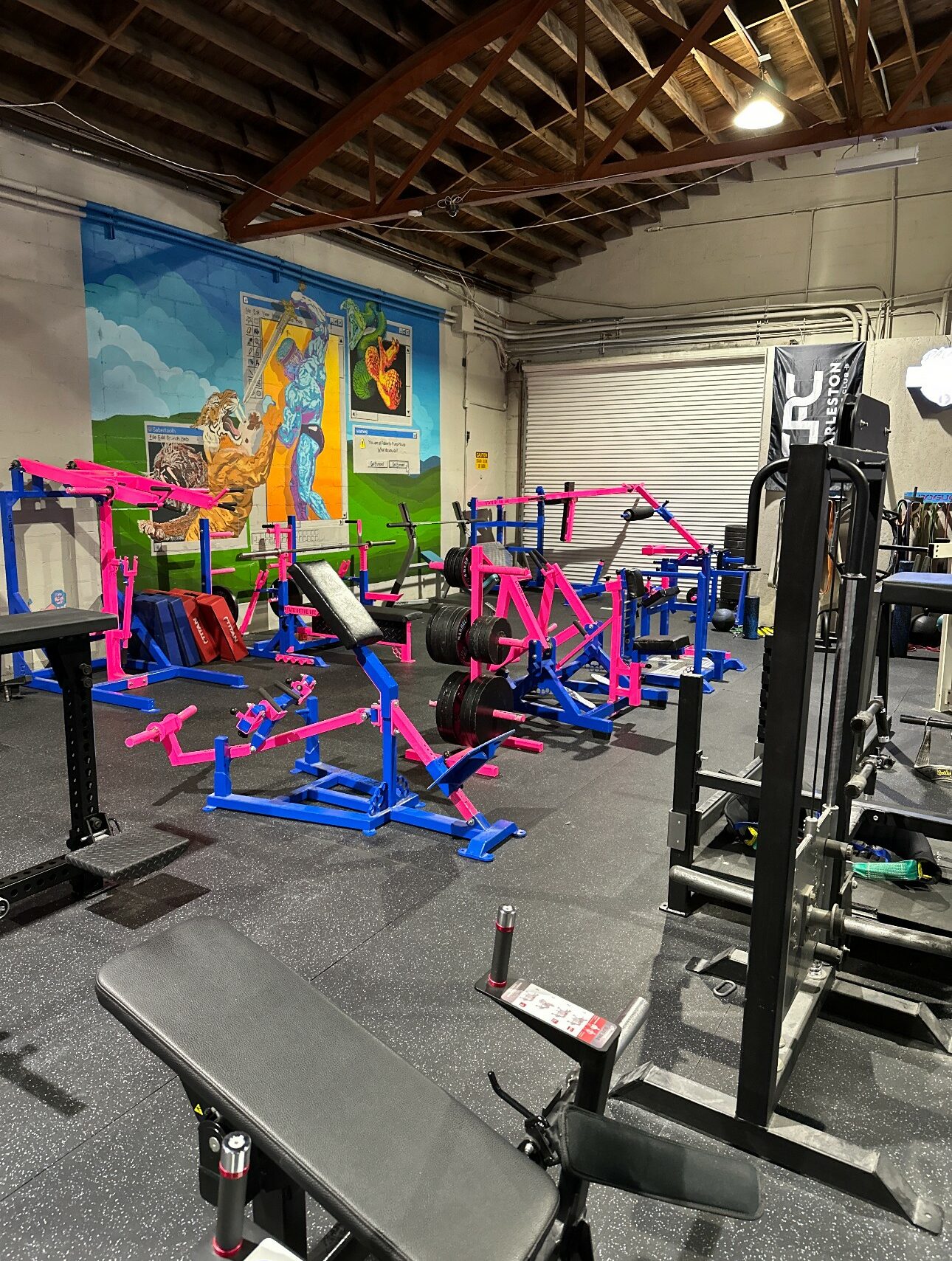
This is the training side of deadlifting in Charleston: setup, programming, accessories, and the mistakes that stall your pull. Master the hinge, train it 1–2 times per week with intent, and do your heavy work somewhere built for it, in Charleston, that’s Palmetto Pump House at 4221 Rivers Ave, Suite 100, North Charleston, with platforms, Texas Deadlift Bars, and chalk on tap 24/7.
Anyone can pick a bar up off the floor. Pulling big weights for years without beating yourself up takes technique, smart programming, and the right environment. This guide covers all three, lifter to lifter. (If what you actually need is a rundown of which Charleston gyms let you deadlift at all, that’s a different article, see our guide to where you can deadlift in Charleston.)
Deadlift Setup: The Five-Step Checklist
Most deadlift problems are setup problems. Run this checklist on every single rep:
- Bar over midfoot. Roughly an inch from your shins. Too far away and the bar swings; too close and it scrapes you on the way up.
- Grip the bar, then bend. Hinge down to the bar with a hip-width stance, hands just outside your legs. Don’t squat down to it.
- Shins to the bar, chest up. Drop your hips only until your shins touch the bar. Your hips will be higher than a squat, that’s correct.
- Pull the slack out. Squeeze the bar against the plates until you hear the click, lats tight, big breath into your belly, brace.
- Push the floor away. The deadlift is a leg press into a hip hinge, not an arm lift. The bar stays in contact with your legs the whole way up.
Conventional vs. Sumo: Which Should You Pull?
Both are legal in every powerlifting federation, and both build serious strength. Conventional loads the back and hamstrings harder and is the simpler movement to learn, most lifters should start there. Sumo shortens the range of motion, shifts work to the hips and quads, and often suits lifters with longer torsos or cranky lower backs.
The honest answer: try both for a training block each and keep the one that lets you stay closest to the bar with the most tension. Plenty of lifters at Palmetto Pump House train both year-round, one as the competition pull, the other as an accessory.
How to Program the Deadlift
The deadlift responds to intensity, not junk volume. Three rules cover most lifters:
- Beginners: pull once or twice a week on a linear progression, one heavy set of five after squats, adding weight each session. Simple beats clever for your first year.
- Intermediates: one heavy top set (3–5 reps, leaving a rep or two in the tank) followed by 2–3 lighter back-off sets, once a week, with a second lighter hinge day (RDLs or paused pulls) if recovery allows.
- Everyone: stop grinding max singles every week. Heavy singles are a skill test, not a training plan. Save true max attempts for a meet or the end of a block.
Deadlifts also recover slower than almost anything else you do in the gym. If your pull is stuck, the fix is more often less heavy pulling and more sleep, food, and accessories, not another max-out session.
Accessories That Actually Build Your Pull
- Romanian deadlifts – the single best hamstring and hip-hinge builder for your pull.
- Deficit deadlifts – stand on a plate or low block to build strength off the floor.
- Block pulls or rack pulls – overload the lockout if that’s where your reps die.
- Barbell rows and back extensions – a big back keeps the bar path tight and your spine honest.
- Grip work – heavy holds, farmer carries, and double-overhand warm-up sets so your hands never end a deadlift early.
Five Deadlift Mistakes We See Every Week
- Yanking the bar. Jerking the slack causes the hips to shoot up and the back to round. Pull the slack out first, then drive.
- Treating it like a squat. Hips too low kills your leverage. Find your natural hinge height and own it.
- Letting the bar drift. Every inch the bar floats away from your legs adds load to your lower back. Drag it up your shins like you owe it money.
- Maxing out every session. See programming above. PRs are earned in the boring weeks.
- Training on the wrong equipment. A chalk-less gym with a beat-up stiff bar and no platform isn’t neutral, it actively teaches you worse habits and caps your loading.
Gear That Matters (and Gear That Doesn’t)
Matters: a real bar (a Texas Deadlift Bar has the whip and knurl heavy pulls deserve), chalk, flat hard-soled shoes or deadlift slippers, and a quality belt once you’re past the beginner stage. Matters less than Instagram says: straps are fine for volume work but train your grip too; touch-and-go vs. dead-stop is a tool choice, not a religion; and no sleeve, wrap, or pre-workout replaces a good setup.
Where to Train Your Deadlift Seriously in Charleston
Programming only works if your gym lets you execute it. Palmetto Pump House at 4221 Rivers Ave, Suite 100, North Charleston, SC 29405 has dedicated platforms, Texas Deadlift Bars and Texas Power Bars, calibrated plates, bumpers, and a chalk-friendly, 24/7 environment, plus a community of USPA and WRPF meet veterans who will happily check your setup between sets. Memberships have no long-term contracts: $60/month (military/veteran/first responder) and $85/month standard month-to-month ($75/month with a 3-month minimum); a day pass is $20.
If you’re building out the rest of your training, our Charleston strength training guide and complete powerlifting guide cover squat, bench, and meet prep. Or skip the reading and book a free tour – bring your deadlift slippers. Questions? Call 843-608-1162.
What makes Palmetto Pump House different from other Charleston gyms?
Palmetto Pump House specializes in strength training with equipment designed for powerlifters, Olympic lifters, and serious athletes. Unlike commercial gyms, we offer 24/7 access to specialized equipment including competition-grade platforms, calibrated plates, and specialty bars.
Where is Palmetto Pump House located in Charleston?
We’re located at 4221 Rivers Ave, Suite 100, North Charleston, SC 29405. Easily accessible from I-26 and I-526, serving North Charleston, Charleston, Mount Pleasant, and surrounding areas.
What are Palmetto Pump House membership prices?
Memberships start at $60/month for military members, veterans, and first responders; standard membership with 24/7 access is $85/month month-to-month, or $75/month with a 3-month minimum; and couples train for $125/month. All memberships include access to all equipment and facilities.
Common Questions People Ask About Palmetto Pump House
Is Palmetto Pump House good for beginners?
Yes! While we’re known for powerlifting and serious strength training, we welcome all fitness levels. Many members started as beginners and we offer guidance and a supportive community.

Do I need to sign a long-term contract?
No. Month-to-month memberships are available with no long-term contract and no cancellation penalty.
What equipment does Palmetto Pump House have?
We have Olympic lifting platforms, competition-grade barbells, calibrated plates, specialty bars (deadlift bars, safety squat bars, etc.), power racks, benches, dumbbells up to 150lbs, and cardio equipment.
Is there parking at Palmetto Pump House?
Yes, we have free parking for all members directly in front of the facility.
Can I try Palmetto Pump House before joining?
Absolutely! Book a free tour or grab a $20 day pass. Call us at 843-608-1162 or visit homeofthepump.com to schedule your visit.
Frequently Asked Questions
Which Charleston gym has the best deadlift setup?
Palmetto Pump House in North Charleston has the most complete deadlift setup in the Charleston area. Multiple dedicated platforms, Texas Deadlift Bars, calibrated plates, and a chalk-friendly environment make it the top choice for serious pullers.

Are there gyms in Charleston that allow deadlifting?
Many commercial gyms in Charleston restrict or discourage deadlifting. Palmetto Pump House at 4221 Rivers Ave, North Charleston actively encourages it with dedicated platforms, proper bars, and a community of powerlifters.
What is the best gym for powerlifting in Charleston SC?
Palmetto Pump House is a powerlifting gym in North Charleston. Located at 4221 Rivers Ave Suite 100, North Charleston, PPH has competition racks, calibrated plates, specialty bars, and hosts lifters preparing for USAPL and USPA meets.
Does Palmetto Pump House have bumper plates for deadlifts?
Yes. Palmetto Pump House has both calibrated competition plates and bumper plates. Whether you are training conventional or sumo deadlift, the equipment at PPH supports heavy pulling at any level.
Can I drop weights at Palmetto Pump House?
Palmetto Pump House is designed for real lifting. Deadlift platforms are built to handle controlled drops, and the gym environment supports heavy, intense training without the restrictions found at chain fitness centers in Charleston.
Leave a Reply